Thinking about trading square footage for simplicity without giving up the coast? If you are drawn to Charleston’s barrier islands, Sullivan’s Island stands out as a rare downsizing option that feels private, walkable, and deeply rooted in place. For many buyers, the appeal is not just owning less. It is owning smarter, with a home that supports easier living and a true lock-and-leave rhythm. Let’s dive in.
Why Sullivan’s Island works
Sullivan’s Island offers a very specific kind of downsizing lifestyle. This is not a condo-driven market built around towers, parking decks, and amenity packages. Instead, it is a barrier island community with about 3.5 miles of Atlantic beachfront, a compact road network, and a small-scale pattern of daily life that can feel refreshingly manageable.
The town points to low-speed roads, sidewalks, parks, businesses, and recreation as features that support walkability. Bike access also connects into the broader region through the Battery 2 Beach route, the East Coast Greenway, and the Ben Sawyer Bikeway. If you want a place where you can keep life simple and still stay active, that matters.
Another draw is the island’s layout. According to the town’s planning documents, Sullivan’s Island has just one commercial node, centered along Middle Street, and it functions as a walkable community center. That compact setup supports a village-style feel that many downsizers prefer over a more spread-out suburban pattern.
What “downsizing” looks like here
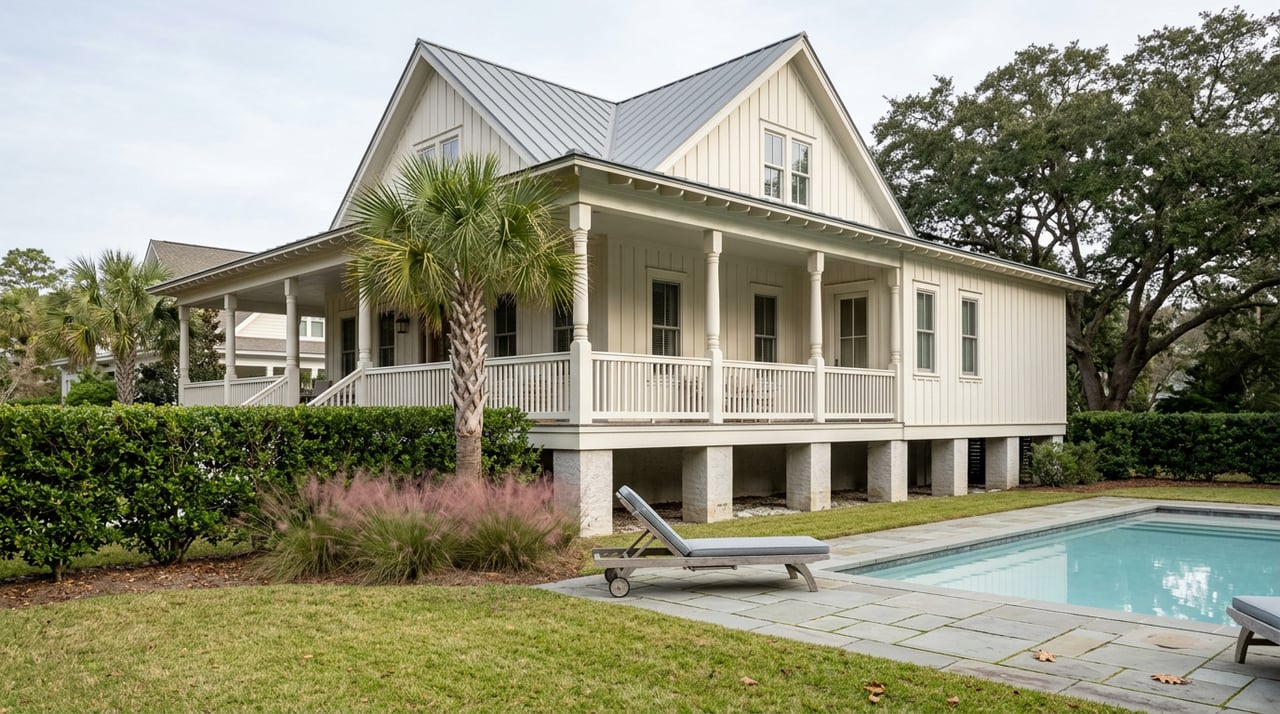
On Sullivan’s Island, downsizing usually does not mean moving into a small condo or a tiny cottage tucked into a dense development. The island is largely single-family residential, and the regulatory framework reinforces that character. In practical terms, a smaller-footprint move here often means a compact detached home, a historic cottage, or a carefully renovated property.
The town’s Comprehensive Plan notes the island’s strong single-family emphasis and the presence of historic resources, including National Register and local historic districts. That is part of what gives Sullivan’s Island its character, but it also shapes what buyers can realistically expect to find.
If you are coming from a large primary home, this is an important mindset shift. Here, the goal is often not the absolute smallest home possible. It is finding a residence that cuts maintenance and excess space while still fitting the island’s residential pattern and architectural rules.
Walkability and daily ease
For many downsizers, convenience matters more than square footage. Sullivan’s Island has several features that support a more streamlined daily routine, especially if you value being able to get around without a long to-do list attached to every outing.
The island’s public spaces add to that appeal. The town maintains a 2-mile nature trail linking Station 16 beach access to Fort Moultrie and the Charleston Light. Beach access infrastructure also includes ADA beach access points at Stations 26, 21, and 18½, ADA matting on part of the nature trail, and beach wheelchairs available by reservation through the town’s access information page.
These details may seem small at first glance, but they can make a real difference if you are planning for aging in place, hosting guests of different mobility levels, or simply wanting an easier path to the beach and outdoor spaces.
Lock-and-leave realities
Sullivan’s Island can fit a lock-and-leave lifestyle, but it is important to view that idea through the lens of island ownership. This is not a fully serviced resort environment. It is a residential coastal town with limited access points, weather exposure, and a more hands-on ownership profile than many inland communities.
The island has two land access points, one through Mount Pleasant via the Ben Sawyer Bridge on SC 703 and another from Isle of Palms across Breach Inlet, according to the town’s transportation overview. That limited-access geography is part of the island’s charm, but it also affects how you think about travel days, storm preparation, and routine errands.
If you spend part of the year elsewhere, local systems matter. Sullivan’s Island’s administrative services page notes that Town Hall houses building, zoning, water and sewer billing, and municipal court functions, and also serves as the municipal emergency operations center. The town also maintains police, fire-rescue, and emergency notification systems, which can provide added peace of mind for part-time owners.
Rules that matter before you buy
On Sullivan’s Island, the ownership experience is shaped by regulation more than many buyers expect. That is not necessarily a negative. In fact, those rules are a big part of what preserves the island’s look and feel. Still, if you are downsizing, it helps to understand those guardrails early.
The town’s Design Review Board reviews new construction and renovations in both commercial and residential districts. The Building Department also requires permits for repairs and improvements. If your plan involves updating an older home, reworking a floor plan, or improving outdoor spaces, review and permitting are part of the process.
There are also use restrictions that shape the market. The Comprehensive Plan states that residences under 1,000 square feet are prohibited in the residential district, and vacation rentals are prohibited there as well. For downsizers, that means Sullivan’s Island is generally better suited to buyers seeking a true residential coastal home rather than a tiny-home concept or a short-term-rental strategy.
Flood and insurance planning
Any downsizing move to Sullivan’s Island should include a serious look at flood exposure, insurance, and long-term resilience. The town states that the entire island is in a flood hazard area, and the Building Department says homes with mortgages must carry NFIP flood insurance. That makes flood review a core part of due diligence, not a box to check at the end.
The town’s emergency preparedness page also advises buyers and agents to contact the Building Official before purchasing because flood-related information and prior permits can affect what improvements may be possible after closing. That step can be especially important if you are buying an older property with renovation potential.
The broader planning context matters too. Sullivan’s Island’s comprehensive planning resources include resiliency and sea-level-rise planning, which underscores that coastal ownership here is a long-range decision. If you want the rewards of island living, it helps to go in with clear expectations and a solid advisory team.
Taxes and sale proceeds
Downsizing is often as much a financial decision as a lifestyle one. In South Carolina, primary residences are assessed at 4.0% of fair market value, while other real estate is assessed at 6.0%. Charleston County requires homeowners to apply for the 4% legal-residence exemption, and the filing deadline appears on the application.
South Carolina also offers a homestead exemption that may remove taxes on the first $50,000 of fair market value for qualifying homeowners who are age 65 or older, totally and permanently disabled, or legally blind. If you are transitioning from a longtime primary residence, this is worth reviewing as part of your move.
At the federal level, the IRS says qualifying homeowners may exclude up to $250,000 of gain from the sale of a main home, or up to $500,000 for married couples filing jointly, if they meet the ownership and use tests under IRS Publication 523. The same IRS guidance also notes that Section 1031 treatment applies to qualifying investment or business property, not to a personal residence. That distinction matters if your downsizing plan overlaps with investment property decisions.
Access to healthcare and travel
One reason some buyers hesitate on barrier-island living is concern about everyday access. On Sullivan’s Island, you are not isolated, but you do rely on the region for major services. For many buyers, that balance works well once they understand the geography.
Regional healthcare options are strong. Roper Hospital in downtown Charleston offers a 24-hour ER, ICU, imaging, lab, surgery, and specialty services. MUSC Health’s East Cooper Medical Pavilion is in Mount Pleasant, and MUSC’s emergency system remains the Lowcountry’s only Level I trauma center, according to the research provided.
If you split time between homes or travel often, airport access also supports the lock-and-leave model. Charleston International Airport is located in North Charleston, giving you a practical connection point for frequent flights without giving up island living.
Is Sullivan’s Island the right fit?
Sullivan’s Island tends to make sense for a specific downsizer profile. You may be a fit if you want a detached coastal home instead of a high-density setup, appreciate a compact commercial core, and are comfortable with the realities of regulated coastal ownership. You are likely looking for quality over size and ease over excess.
It may be less ideal if your version of downsizing depends on a condo-heavy market, minimal regulatory review, or a short-term-rental plan. The island’s structure and rules support a true residential environment, and that is a major part of both its appeal and its limitations.
The key is buying with a clear strategy. If you understand the housing stock, flood and insurance landscape, access points, and improvement constraints, Sullivan’s Island can be a compelling landing spot for your next chapter.
When you are ready to explore whether Sullivan’s Island fits your downsizing goals, working with a steady local advisor can save time and prevent expensive surprises. Russ Knapp can help you evaluate island properties with a clear eye toward lifestyle fit, ownership realities, and long-term value.
FAQs
What makes Sullivan’s Island appealing for downsizing?
- Sullivan’s Island offers a walkable, village-style setting with a compact commercial core, beach and trail access, and a predominantly single-family residential environment that can suit buyers seeking a simpler coastal lifestyle.
What type of downsizing homes are common on Sullivan’s Island?
- Most downsizing options are detached homes, historic cottages, or renovated smaller-footprint residences rather than condo-heavy or tiny-home products.
What should buyers know about flood risk on Sullivan’s Island?
- The entire island is in a flood hazard area, and the town says homes with mortgages must carry NFIP flood insurance, so flood review and building history should be part of early due diligence.
What regulations affect renovations on Sullivan’s Island homes?
- New construction and renovations may be reviewed by the Design Review Board, and permits are required for repairs and improvements, which can affect post-closing plans.
What tax issues matter when downsizing to Sullivan’s Island?
- Buyers should review South Carolina’s 4% legal-residence assessment, the state homestead exemption for qualifying owners, and potential federal capital gains exclusions under IRS main-home sale rules.
What services support a lock-and-leave lifestyle on Sullivan’s Island?
- The town maintains police, fire-rescue, emergency notification systems, and centralized municipal services, while regional healthcare and Charleston International Airport support part-time owners and frequent travelers.