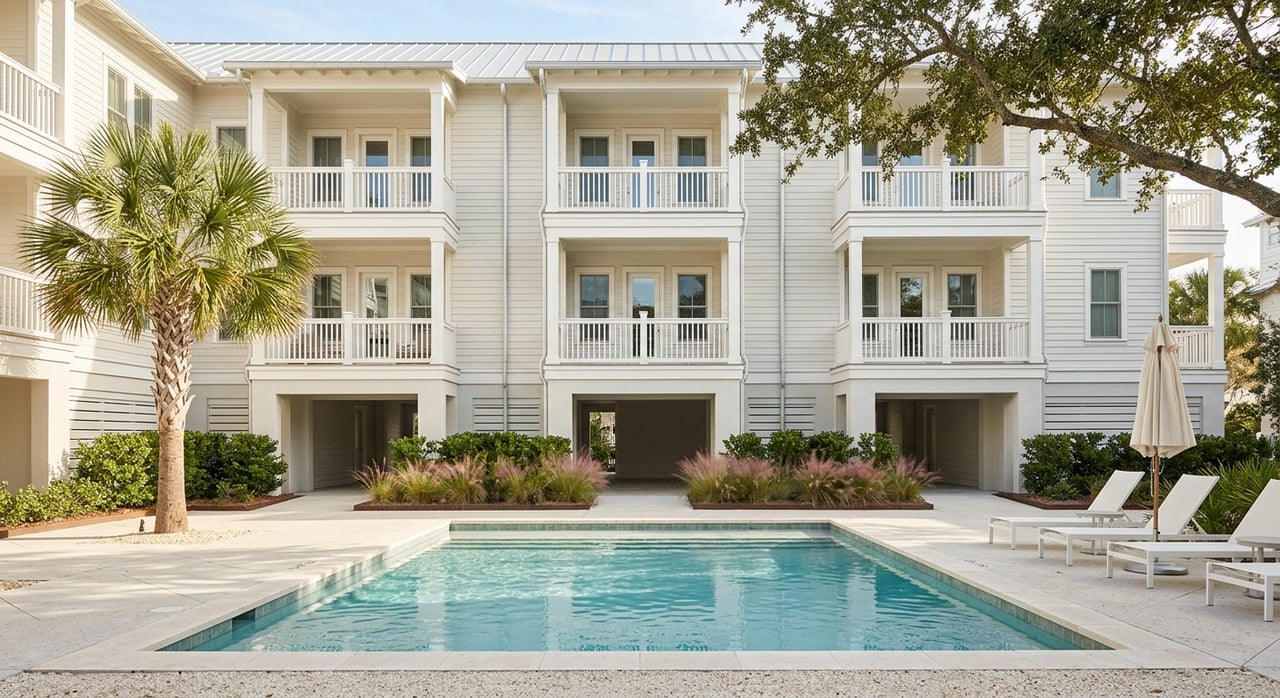
Trying to choose between a condo and a house on Isle of Palms? That decision can shape everything from your monthly costs to your maintenance workload to your rental options. If you are buying a second home, an investment property, or a full-time coastal residence, it helps to understand how these two property types work in real life. This guide breaks down the key tradeoffs so you can make a confident decision. Let’s dive in.
Condos vs homes on Isle of Palms
On Isle of Palms, the biggest difference is usually convenience versus control. A condo often comes with a more managed ownership structure, while a detached home usually gives you more direct control over the property.
Under South Carolina’s Horizontal Property Act, condo associations handle common elements, collect shared expenses, and can insure the property against certain risks. In practical terms, that means condo ownership often includes shared governance, monthly dues, and association rules that shape how the property is maintained and used.
A detached home often gives you a simpler property-level decision tree. You are typically making more of the maintenance and upkeep decisions yourself. That said, you should not assume every house is outside an HOA structure, because the Consumer Financial Protection Bureau notes that some neighborhoods require HOA dues as well.
Ownership and maintenance differences
How condo ownership works
With a condo, you own your unit and share ownership of common areas through the association structure. The association is generally responsible for common elements, and co-owners share common expenses on a pro rata basis under South Carolina law.
That setup can appeal to buyers who want less day-to-day involvement with exterior work and shared-area upkeep. It can also mean you need to be comfortable with board rules, reserve funding, dues changes, and the possibility of special assessments.
How homeownership works
With a detached home, you usually have more direct responsibility for maintenance decisions. That can give you greater flexibility around repairs, timing, vendors, and property management choices.
For many buyers, especially those planning long stays or wanting more control over use, that flexibility is a major advantage. The tradeoff is that the work and coordination do not shift to a condo association.
Why association documents matter
If you are considering a condo, due diligence goes beyond the monthly fee. South Carolina law allows unpaid condo assessments to become liens on the unit, so dues history, reserve strength, and any special-assessment exposure deserve close review.
This is one of the clearest differences between condos and homes on Isle of Palms. A condo purchase is not just about the unit itself. It is also about the financial and operational health of the project.
Comparing the true cost of ownership
Monthly costs are structured differently
One common mistake is comparing a condo’s mortgage payment to a house’s mortgage payment without looking at the full picture. The CFPB explains that HOA and condo fees are usually separate from your mortgage, and buyers should budget for mortgage payments, property taxes, insurance, and association dues as separate housing costs.
Fannie Mae also notes that condo fees may cover items such as landscaping, exterior maintenance, water, or sewer. That means a condo’s higher dues may offset some services you would otherwise pay for separately in a house.
Property taxes can vary by use
South Carolina uses a 4% assessment ratio for an owner’s legal residence and 6% for other residential property. According to the South Carolina Department of Revenue, an owner-occupied legal residence rented no more than 72 days in a calendar year may still qualify for the 4% ratio if the owner meets the other eligibility rules.
That matters on Isle of Palms, where many buyers are deciding between a primary residence, second home, or income-producing property. The way you plan to use the property can affect your carrying costs.
Reassessment is part of the picture
Property taxes are also influenced by county reassessment. Isle of Palms’ 2025 reassessment notice says Charleston County is updating property values countywide, and the city’s median residential sales price rose from $1.2 million in 2020 to $1.7 million in 2025.
The same notice explains that many properties are protected by a 15% cap on taxable-value increases, with exceptions for recent sales, new construction, and significant improvements. If you are comparing condos and homes, this is another reason to look beyond the list price alone.
Insurance and flood questions to ask
Coastal insurance is a major factor whether you buy a condo or a house. The CFPB notes that standard homeowners insurance typically does not cover flood damage, and condo buyers still need their own unit-level coverage even when the association carries master insurance for common areas.
Before you commit to a property, it helps to check the address using FEMA’s Flood Map Service Center. On a barrier island like Isle of Palms, insurance structure and flood exposure can affect both your monthly budget and your comfort level with the purchase.
In many cases, houses and condos create different insurance questions rather than a simple cheaper-versus-more-expensive answer. The important part is understanding what the association insures, what you insure personally, and how flood risk fits into the total cost.
Rental flexibility on Isle of Palms
Both property types face local rules
If rental income is part of your plan, do not assume condos are automatically easier or houses are automatically more flexible. On Isle of Palms, owners who rent residential units, including both houses and condos, must obtain a rental business license.
The city’s short-term rental rules also cover occupancy, parking, posting house rules, and possible license revocation after repeated founded complaints. In other words, both property types operate within the same city licensing framework.
Fees and taxes matter
The city says the short-term rental license fee is based on prior-year gross income, starting at $450 for the first $2,000 earned plus $4.60 for each additional $1,000. It also says rentals of 30 days or less require collection and remittance of a 14% tax stack that includes state, county, and city taxes plus the beach preservation fee.
For buyers comparing condos and homes as investments, those rules belong in your underwriting from the start. Gross income is only one side of the equation.
Occupancy and parking can affect fit
The city ordinance says short-term rentals typically allow two people per bedroom plus two, up to a maximum overnight occupancy of 12. It also says single-family rental units must be rented in their entirety rather than by room or as shared rooms.
The city also allows up to four portable parking permits per calendar year when off-street parking is inadequate. If you expect to rent frequently, these practical details can influence whether a condo or home better matches your goals.
What current rental patterns suggest
Isle of Palms’ own short-term rental analysis found that, as of October 31, 2023, 40% of all dwelling units had a short-term rental license. The same report showed a meaningful difference by property type: 67% of condo dwelling units had an STR license, compared with 29% of single-family dwellings.
That does not mean a condo is always the better investment or a home is always the better personal retreat. It does suggest that condos on Isle of Palms are often more rental-oriented, while detached homes may appeal more often to buyers prioritizing direct control, private use, or a different ownership experience.
Financing can be a bigger issue for condos
Financing deserves special attention when you are comparing condos and homes. Fannie Mae says condo projects can be ineligible if they have unresolved critical repairs, inadequate master insurance, significant litigation, or if they operate as a hotel or manage daily or short-term rentals. You can review this risk framework through Fannie Mae’s condo project guidance.
This matters because condo financing is not only about you as the borrower. It is also about the project itself. If you plan to finance your purchase, or if future resale to financed buyers matters to you, condo project review should be part of your early screening process.
Detached homes can still have financing considerations, but condo purchases often involve an extra layer of lender review. For many buyers, that is manageable. It just needs to be part of the decision upfront.
A simple way to decide
If you are narrowing the field, these five questions can help you decide which property type fits your goals best:
- Is this your primary home, second home, or investment property?
- Do you plan to rent it short-term?
- How comfortable are you with HOA dues, reserve funding, and special-assessment risk?
- How important are parking and occupancy flexibility to your plans?
- If you are buying a condo, is the project likely to meet lender requirements?
In general, a condo is often the better fit if you want a more managed ownership structure and are comfortable with shared rules and shared costs. A detached home is often the better fit if you want more direct control over upkeep, use, and property-level decisions.
The right choice depends less on broad generalizations and more on how you plan to live in, use, and hold the property. On Isle of Palms, that clarity can save you time, money, and stress.
If you want help comparing specific Isle of Palms condos and homes through the lens of lifestyle, rental goals, insurance, and long-term value, connect with Russ Knapp. His island-focused, high-touch approach can help you evaluate the tradeoffs clearly and move forward with confidence.
FAQs
What is the main difference between an Isle of Palms condo and a house?
- A condo usually offers a more managed ownership structure with association dues and shared governance, while a detached home usually gives you more direct control over maintenance and use.
Do Isle of Palms condos and homes both need a short-term rental license?
- Yes. The City of Isle of Palms requires owners who rent residential units, including condos and houses, to obtain a rental business license.
Are condo fees included in a mortgage payment on Isle of Palms?
- Usually no. The CFPB says HOA and condo fees are generally paid separately from your mortgage, so you should budget for them as a separate cost.
Can an Isle of Palms property still qualify for South Carolina’s 4% tax assessment ratio if it is rented?
- In some cases, yes. The South Carolina Department of Revenue says an owner-occupied legal residence rented no more than 72 days in a calendar year may still qualify if the owner meets the other requirements.
Why is condo financing sometimes harder on Isle of Palms?
- Condo financing can depend on the project as well as the buyer. Fannie Mae says issues such as unresolved repairs, inadequate master insurance, litigation, or hotel-like operations can affect project eligibility.
Are condos more rental-oriented than homes on Isle of Palms?
- Based on the City of Isle of Palms short-term rental analysis, condos were more rental-oriented as of October 31, 2023, with 67% of condo units licensed for STR use versus 29% of single-family dwellings.